
Blog
- Home
- Blog

You run a great small business directory. But if people can't find you online, you might as well not exist. That's where a local business directory comes in. Nearly half of all Google searches are for local stuff. Small business owners are out there right now, looking for businesses like yours. The question is, do they find you, or do they find your competitor?
A local business directory is basically an online hub where businesses get listed by what they do and where they're located. Think of it as the modern Yellow Pages, but way more detailed.
These listings usually include your contact info, a description, photos, reviews, hours, and links to your website. Google Business Profile, Yelp, Bing Places, Apple Maps, those are the big ones.
Directory listings are not optional. They are the foundation of your online presence.
Boosts local SEO. Search engines use these listings to double-check your business info. When your name, address, and phone number match across all your directories, Google starts to trust you more. And that trust? It jumps you higher in local search results.
Increases visibility. The more places your business shows up online, the more people see you. Those "local packs" the top three results Google shows for local searches, they pull info straight from these local business directory listings.
Builds credibility. A listing with accurate information and genuine reviews signals professionalism. When customers see your business across multiple trusted platforms, they are more likely to trust you.
Drives traffic. Directory listings almost always include a link back to your website. These backlinks help your overall small business seo services and send targeted traffic from people actively searching for your services.
Supports reviews. Directories allow customers to leave reviews. Positive reviews influence buying decisions and help search engines rank you higher. A business with at least five reviews sees a 270% increase in purchase likelihood.
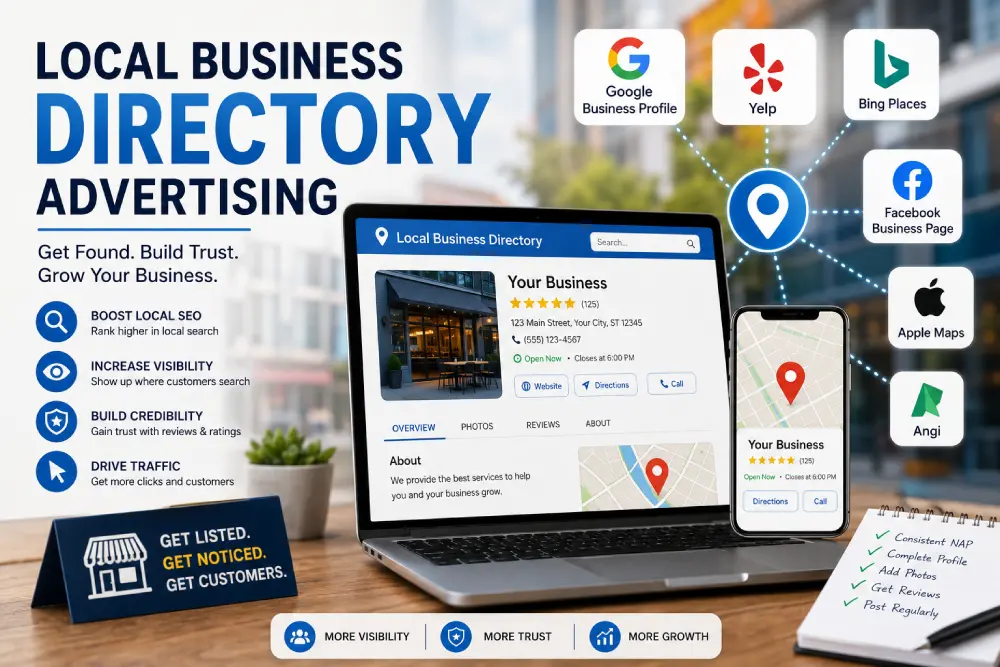
Start with the big players for Small business marketing:
Beyond these, look for industry-specific directories. A restaurant should be on OpenTable. A home service business should be in Angi. A healthcare provider should be on HealthGrades .
Getting listed is step one. Getting results requires optimization.
A local business directory listing is free visibility that keeps working in the background. It boosts your SEO, builds credibility, and drives customers to your door. Set it up right, keep it current, and let it quietly bring in customers while you focus on running your business .
It's basically an online phone book that lists businesses by what they do and where they are. It matters, cause that's how people find you. It builds trust and gives your local SEO a boost.
Google Business Profile is number one — don't skip that. Then hit Yelp, Bing Places, Facebook, Apple Maps, and any niche directories that fit your industry.
Most big ones are free — Google, Yelp, Bing. Some industry-specific or premium ones might charge, but the basics won't cost you.
They create citations, that's just mentions of your name, address, and phone number. When all that info matches across trusted sites, search engines trust you more and rank you higher.
NAP = Name, Address, Phone Number. It's gotta be exactly the same everywhere you're listed. Even small differences — like "St." vs "Street" can mess with your rankings.
Update them anytime your info changes. And check 'em at least once a month like hours change, phone numbers change, make sure it's all still right.
Yeah, totally. Niche directories bring in better leads because the people there are actually searching for what you do.
Reviews matter big time. They influence whether customers choose you and they help your rankings. Good reviews build trust. Responding to them shows you care and helps your visibility.
Yeah, there's tools for that. Thryv, Yext, they let you update all your listings from one place. No logging into each site one by one.
Search engines drop you. Customers get confused. They might call a wrong number or show up at the wrong address. Keep it tight or lose business.

Comments (0)