Blog
- Home
- Blog
When people search online for local services, they often compare businesses before deciding who to contact. They check Google, directories, review platforms, and websites to verify business details. When this information is consistent, customers can more easily trust and contact your business.
This is where local SEO citations matter. They help establish your online presence, make your business easier to discover, and support visibility in local search results.
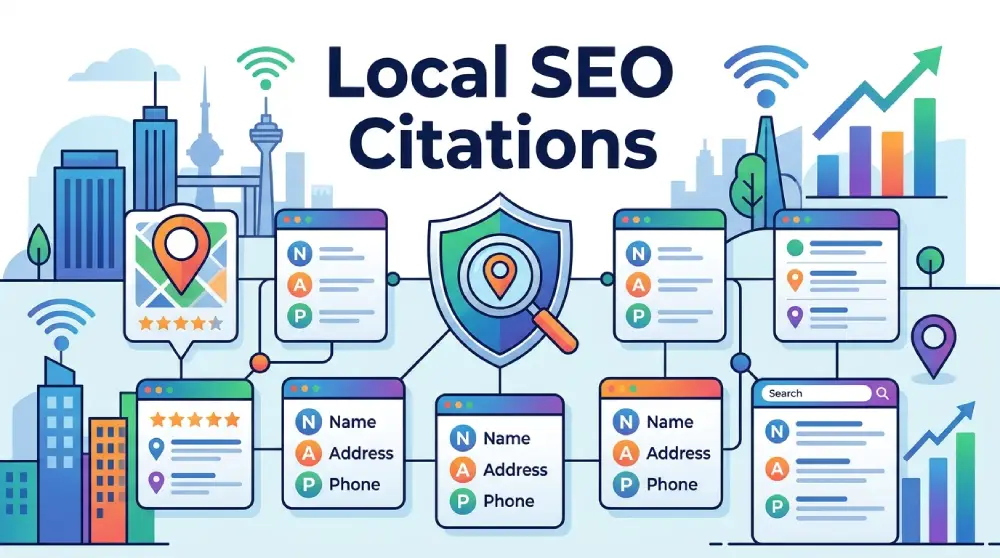
Local business citations are online mentions of your business's essential information, commonly known as NAP: Name, Address, and Phone number.
They appear on business directories, social media platforms, review websites, local chamber of commerce pages, and industry-specific listing sites. Some also include your website, business hours, services, and customer reviews.
For example, a plumbing company listed on Google Business Profile, Yelp, and a local directory has citations across those platforms. Consistent details help customers identify and verify the business.
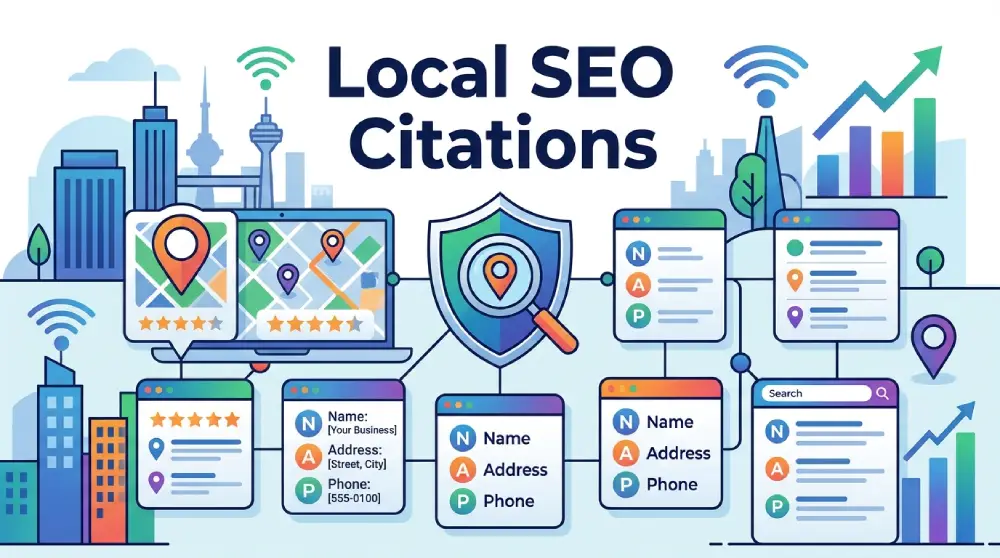
Accurate citations make it easier for customers to confirm that your business is legitimate, reachable, and operating at the location it claims.
If your website displays one phone number while directories show another, customers may become confused or contact the wrong number.
Consider this example:
The first two are formatting variations that communicate the same address. The third omits the suite number, which could create confusion.
Similarly, outdated phone numbers or different business names across listings can weaken consistency. Follow accurate citation practices by maintaining one reliable version of your business information.
Listings on reputable directories and relevant industry websites give customers more opportunities to discover your business, compare services, and read reviews.
However, more listings do not automatically mean more trust. Focus on accurate information, relevant platforms, and genuine customer feedback.
Search engines use multiple signals to understand local businesses and determine which results are relevant. Consistent business information across trusted platforms can help reinforce your business's identity and location.
Whitespark's 2026 Local Search Ranking Factors report estimates that citation signals account for approximately 7% of local organic ranking factors and 13% of AI search visibility factors, based on expert survey responses.
These figures are expert estimates, not direct measurements of Google's algorithm or guaranteed ranking improvements. However, they demonstrate why citations remain relevant to local visibility.
Read the Whitespark 2026 Local Search Ranking Factors report, published November 6, 2025.
Citations work best alongside Google Business Profile optimization, genuine customer reviews, useful website content, and relevant local links.
Customers use different platforms to find local businesses. Some rely on Google, while others use maps, review websites, social media, and industry-specific directories.
Maintaining accurate local search citations across relevant platforms creates more opportunities for customers to discover your services.
Here are ten platforms worth considering:
| Platform | Category |
|---|---|
| Google Business Profile | Search and maps |
| Apple Business Connect | Search and maps |
| Bing Places | Search and maps |
| Social media | |
| Yelp | Reviews and directories |
| Better Business Bureau | Business directory |
| Angi | Home services |
| Tripadvisor | Travel and hospitality |
| ChamberofCommerce.com | Business directory |
| Digital AI Cards | Online business directory |
Choose platforms that match your industry and audience rather than submitting your information everywhere.
Customers increasingly use AI-powered tools to find local services and recommendations. These tools can draw information from business profiles, directories, reviews, articles, and other websites.
Consistent listings help establish a clearer online identity. Beyond basic directories, businesses should also seek relevant mentions from industry associations, local publications, professional websites, and other credible sources.
Whitespark's 2026 report highlights the importance of citations for AI search visibility. Although consistent listings cannot guarantee an AI recommendation, accurate business information across multiple credible sources can support discoverability beyond traditional search engines.
Building citations requires a consistent process. Follow these steps to create and maintain accurate listings.
Before submitting your business to directories, confirm your:
Keep these details in one document so you can use them consistently.
Complete your Google Business Profile with accurate contact details, categories, hours, photos, and services.
If you operate a service-area business and do not serve customers at your address, follow Google's guidelines for hiding your residential or non-customer-facing address.
Read Google's business representation guidelines.
Start with major search platforms, reputable general directories, local business associations, and industry-specific websites. Prioritize relevance and quality over the number of listings.
Search for your business name, address, and phone number to find existing profiles. Identify duplicate listings, outdated details, and inconsistent information. Claim or correct legitimate profiles wherever possible.
Business information can change over time. Update your listings whenever your phone number, address, website, or operating hours change. Keep a record of the platforms where your business appears.
Even a good citation strategy can lose value when business information is inaccurate. Avoid these common mistakes:
Creating listings is only the beginning. Track whether they generate website visits, calls, and customer inquiries.
In Google Analytics 4, open Reports → Acquisition → Traffic acquisition. Review referral sources to identify visits from directories such as Yelp or Facebook.
Compare sessions, engagement, and key events to see which platforms bring useful visitors. You can also use UTM parameters on listing website links to identify referral sources more clearly. See Google's GA4 Traffic acquisition guide.
Monitor important customer interactions, including:
Google explains these measurements in its Business Profile performance guide.
Review your important listings every three months. Check business names, addresses, phone numbers, website links, opening hours, and duplicate profiles.
Record each listing's URL, last review date, and any corrections needed. This makes Local Listing Management easier and helps prevent outdated information from remaining online.
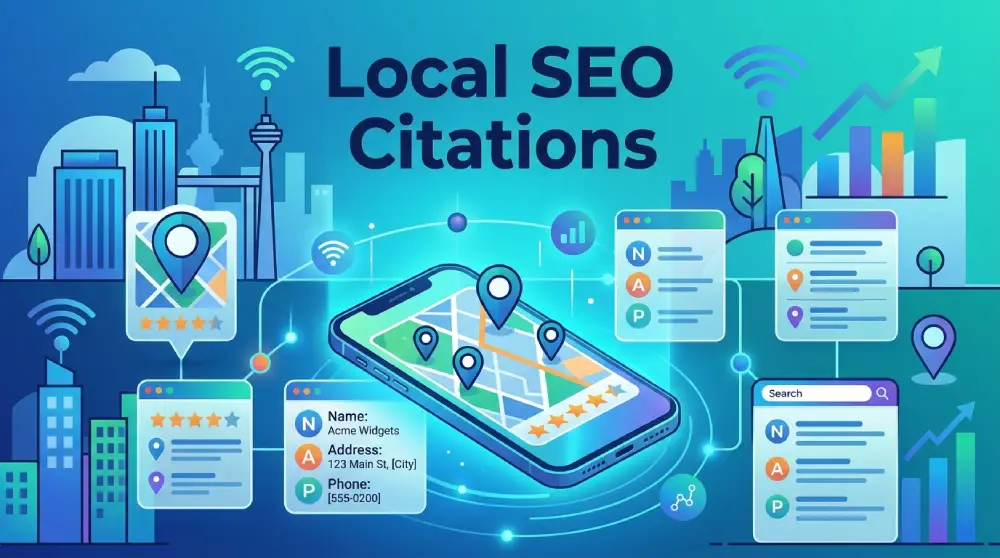
Accurate business information, consistent listings, and genuine online mentions all contribute to a stronger local presence. Local SEO citations help customers discover and verify your business across search engines, directories, and other platforms.
Start with your most important listings, correct inconsistencies, remove duplicates, and review your profiles quarterly. Combined with useful website content, customer reviews, and a complete Google Business Profile, a well-managed citation strategy can strengthen your visibility and help potential customers choose your business.
Yes. Whitespark's 2026 report estimates that citation signals represent approximately 7% of local organic ranking factors and 13% of AI search visibility factors, based on expert survey responses. These figures are estimates rather than guaranteed ranking outcomes.
There is no fixed number. Focus on reputable search platforms, relevant industry directories, local websites, and trusted review platforms. Accuracy matters more than quantity.
Citations can support local SEO by reinforcing business information, but they do not guarantee higher rankings. Google considers multiple factors, including relevance, distance, and prominence.
A citation is an online mention of your business information, such as its name, address, and phone number. A backlink is a clickable link from another website to yours. Some citations include backlinks, but not all do.
Review important listings quarterly and update them whenever your business name, address, phone number, website, or operating hours change.
A local citations management provider can help identify duplicate listings, correct inaccurate information, and manage updates across multiple platforms. Before hiring one, check which directories it covers, how it handles duplicates, and whether you retain ownership of your business profiles.